RESEARCH
SwimSense: Computational Sensing for Swimming Analysis (in-progress)
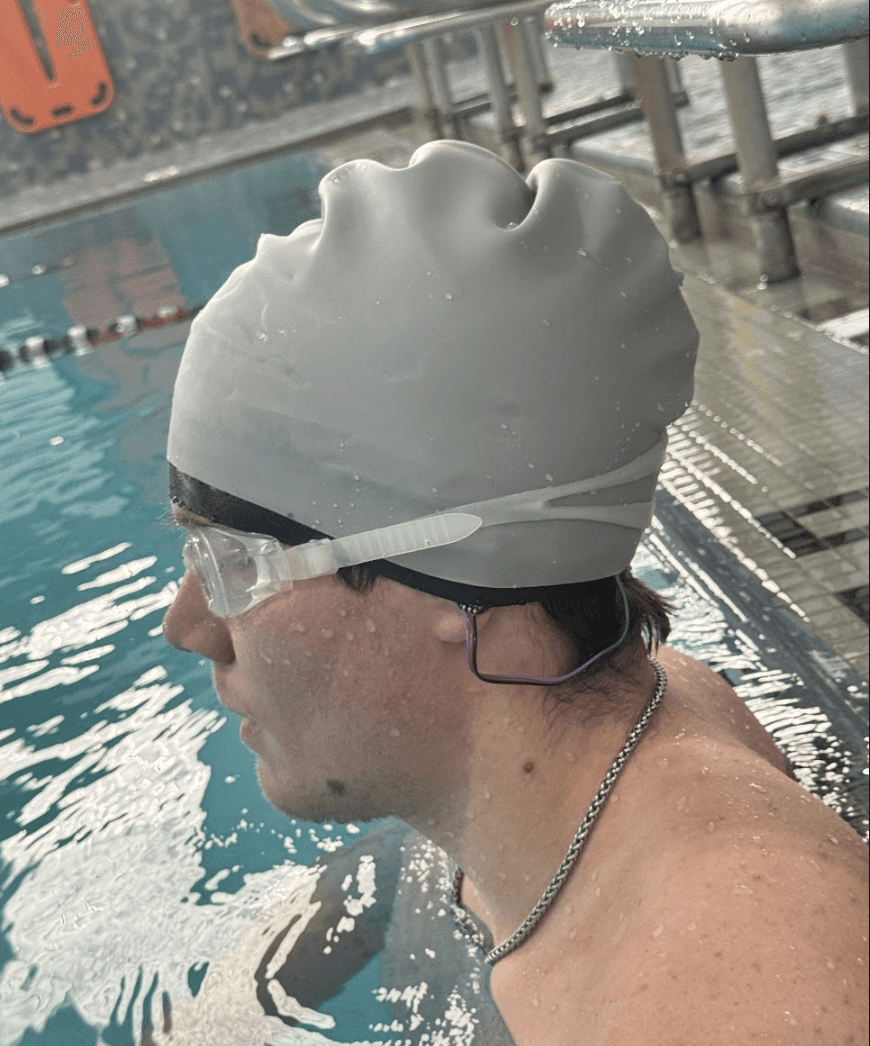
SwimSense is a wireless, wearable, waterproof device equipped with IMU, PPG, and temperature sensor for realtime health sensing and reporting for aquatic environments. Originally as a research collaboration with MIT Media Lab and Dept. of Mechanical Engineering, I am now independently developing SwimSense to improve comfort, battery life, and data quality. The device aims to provide swimmers and coaches with detailed insights into performance and physiological metrics during training. I also plan on adapting this device to other extreme environments where low energy, long range health monitoring is critical.
MAGE: Motion-to-Audio Generative autoEncoder (in-progress)
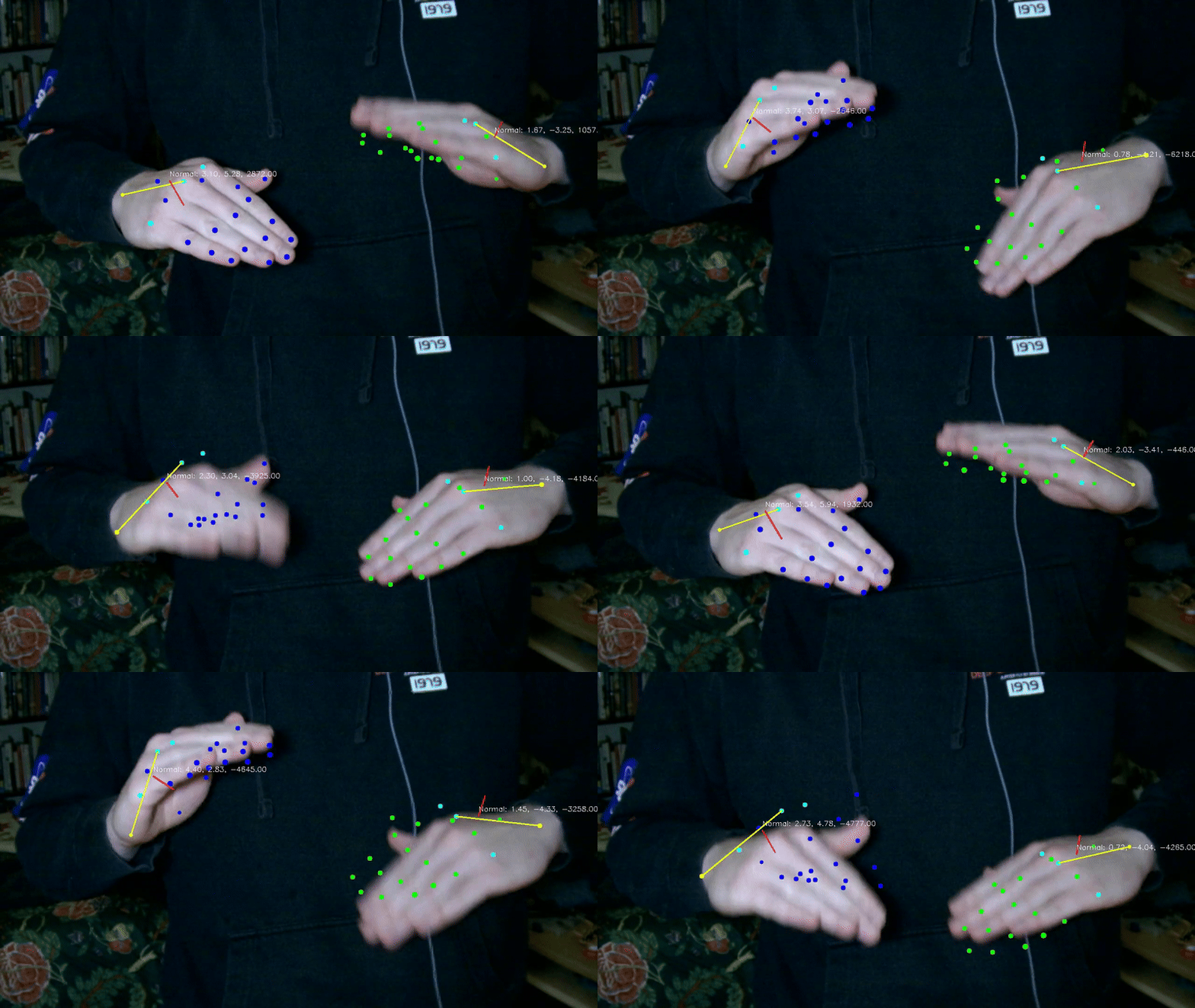
An ongoing independent research project that uses a variational autoencoder to generate percussive audio from hand gestures. The model builds upon RAVE, a state-of-the-art neural audio synthesis architecture, and trains on high-frame-rate recordings of conga drum performances (played by my dad) to capture fine hand movements. The goal is to make it possible to play any percussive instrument using only hand gestures and a camera.
Music-Spectrogram Inpainting for Hydrogel Dewatering (in-progress)
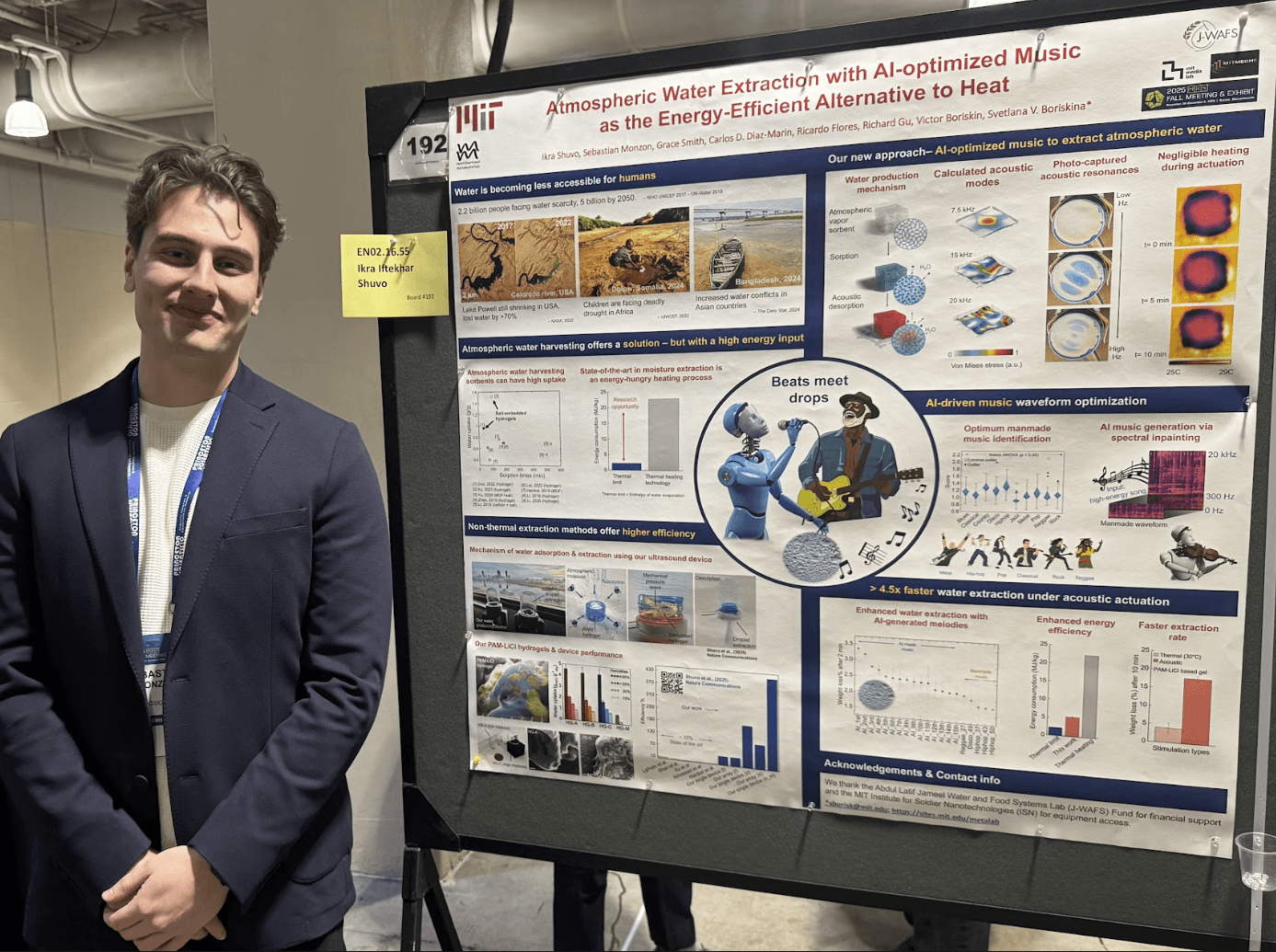
In collaboration with researchers at the MIT Department of Mechanical Engineering and Media Lab, I developed a Stable Diffusion-based pipeline (inspired by Riffusion) for Mel-spectrogram inpainting. The model reconstructs masked audio regions, keeping optimal frequencies intact. I am currently experimenting with CLIP soft tokens to directly generate improved hydrogel music without inpainting and an audio equalizer I designed based on band performance correlations and SHAP analysis.
Honors Thesis
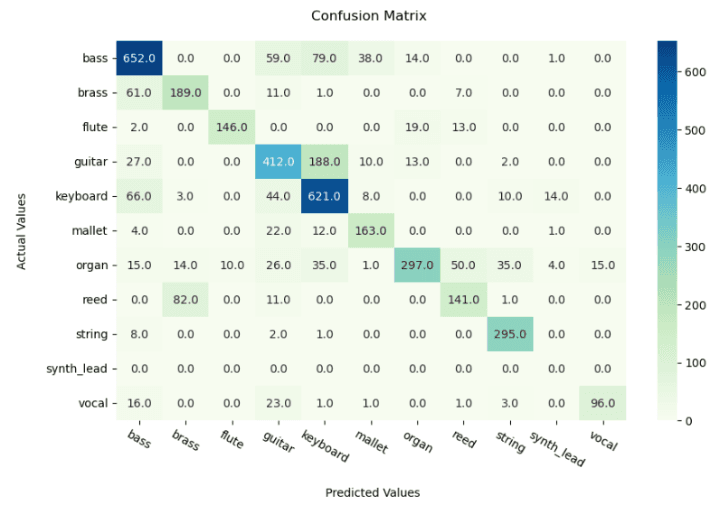
As a recreational music producer, I've tried to find "my sound" from the beginning. That mission led me to research Generative Adversarial Networks for timbre/sound synthesis in my undergraduate honors thesis at UMass Amherst. With limited time, I built a multiclass classification model for instrument identification as a foundation for future GAN-based synthesis. The long-term vision was to generate novel sounds directly from text descriptions like “soothing piano with warm overtones.” I never got to build the GAN, but I learned a lot about deep learning, audio processing, and the challenges of generative models.